Showing posts with label rap. Show all posts

Tuesday, September 22, 2026

C.L. Smooth Sues Longtime Associate Over Alleged $132,000 Royalty Diversion

Cover art for Pete Rock & C.L. Smooth’s 1992 single “They Reminisce Over You (T.R.O.Y.).” C.L. Smooth, whose legal name is Corey Penn, alleges in a new federal lawsuit that about $132,000 in SoundExchange royalties was diverted without his knowledge. (Elektra Records/Handout)

C.L. Smooth says he discovered this spring that someone else had been collecting digital royalties in his name for years.

Now the rapper is asking a federal court to make them give the money back.

Smooth, whose legal name is Corey Penn, filed a lawsuit Sept. 13 accusing a longtime associate, the associate’s wife and two companies of diverting approximately $132,000 in SoundExchange royalty payments that Penn says belonged to him.

The lawsuit, filed in U.S. District Court for the Southern District of New York in White Plains, names Nickolas Taylor, Nichelle Taylor, St. Nick Entertainment Inc. and Prosper Software Solutions Inc., doing business as Taylor Your Care.

Penn has demanded a jury trial.

The federal docket also shows that he filed copies of checks and a 1099 as an exhibit to the complaint.

According to Westfair Business Journal, which reviewed the complaint, Penn says his relationship with Nickolas Taylor stretches back to 1989, when the two were part of the same New York music and social circles.

Taylor began helping Penn book performances around 2001, according to the lawsuit.

There was no written management agreement.

Instead, Penn alleges, the arrangement operated on their longstanding personal relationship and trust. He says he provided Taylor with sensitive information, including passport details needed for international performances.

The relationship eventually deteriorated amid disputes over money and business matters involving St. Nick Entertainment and some of Penn’s independent music projects.

Penn says he stopped doing business with Taylor around 2007.

Around that period, according to the complaint, a SoundExchange account existed in Penn’s name while royalty payments belonging to him were being sent to addresses associated with the Taylors.

Penn says he did not learn that the account already existed until March, when he attempted to establish his own SoundExchange account.

According to the complaint, a subsequent SoundExchange investigation identified approximately $132,000 in royalty payments dating as far back as early 2006.

Penn alleges royalty checks and federal tax forms were sent to the Taylors’ home in Elmsford and other addresses associated with them in Pleasantville and Yonkers.

He further alleges that checks made payable to him were endorsed by Nichelle Taylor before being deposited by the Taylors.

Those allegations have not been proven in court.

SoundExchange occupies a specific part of the music royalty system.

It collects statutory digital performance royalties for sound recordings played through noninteractive services such as SiriusXM, Pandora and internet radio and distributes that money to featured artists and sound-recording rights owners.

Those are different from the songwriting and publishing royalties generated by the underlying composition.

Penn says he has since regained control of the SoundExchange account and received about $30,000 in accumulated royalties covering 2023 through 2026.

He accuses the defendants of fraud, conversion, breach of fiduciary duty, aiding and abetting breach of fiduciary duty and unjust enrichment.

Penn is seeking the return of money he alleges was wrongfully obtained as well as unspecified punitive damages.

That does not mean he is simply “suing for $132,000.”

In fact, the federal docket contains an unusual correction that could otherwise create confusion about how much money is at stake.

When the case was opened, the court’s statistical information listed a $132 million demand. The clerk corrected that entry the following day, stating that the figure had been entered erroneously and changing the dollar demand to none.

The roughly $132,000 figure instead represents the amount Penn alleges SoundExchange identified as having been diverted.

No response from the defendants was available in the publicly accessible docket reviewed for this story. That docket was last retrieved Sept. 14 and notes that a more recent listing may be available through PACER.

Westfair reported that efforts to locate the Taylors for comment were unsuccessful.

The dispute reaches into a catalog that has been part of hip-hop for more than three decades.

Penn rose to prominence alongside producer Pete Rock as Pete Rock & C.L. Smooth. The duo released “All Souled Out” in 1991, followed by the albums “Mecca and the Soul Brother” in 1992 and “The Main Ingredient” in 1994.

“Mecca and the Soul Brother” included “They Reminisce Over You (T.R.O.Y.),” the duo’s enduring tribute to Troy “Trouble T Roy” Dixon of Heavy D & The Boyz.
C.L. Smooth’s official biography still describes “T.R.O.Y.” as the record most closely associated with his career more than three decades later.

The music has kept playing.

Penn’s lawsuit now asks who was getting paid when it did.

Monday, September 21, 2026

Memphis Honors Tay Keith With Music Lab, Key to City and Day of His Own

Grammy-nominated producer Tay Keith is shown in an undated promotional portrait. Memphis Public Libraries dedicated the Tay Keith Music Lab on Monday, creating a music production space for young people in honor of the late Memphis hitmaker, whose credits included Travis Scott’s “Sicko Mode,” Drake’s “Nonstop” and Beyoncé’s “Before I Let Go.”

Before Tay Keith was producing No. 1 records with some of hip-hop's biggest stars, his sister remembers the work beginning in a little blue, yellow and white house on Bruton Street in Memphis.

On Monday, his hometown put his name on a room where somebody else's career might begin.

Memphis Public Libraries formally dedicated its music production room inside Cloud901 at the Benjamin L. Hooks Central Library as the Tay Keith Music Lab, honoring the late Grammy-nominated producer while expanding an initiative aimed at giving young people access to music-production tools and instruction.

Keith's older sister, Lisa Austin, told those gathered for the dedication that the family's Raleigh home was where her brother discovered his love of music, started making beats and built the foundation for what the world would eventually know as Tay Keith.

But Austin made clear that the family did not want the room to function simply as a memorial.

“This lab is more than just putting Tay's name on a room,” Austin said. “It's about access and opportunity.”

Cloud901 is Memphis Public Libraries' free technology and production center for teenagers ages 13 to 18. The Tay Keith Legacy Foundation donated to the project, which is being developed into a broader initiative around Keith's life, career and commitment to young people.

Plans include hands-on beat-making and music-production instruction, a permanent archival collection and oral histories with Keith's relatives, friends and associates.

Library officials said they hope to collect photographs, handwritten notes, studio material, correspondence, memorabilia and other pieces of Keith's history. Family members and others who knew him will also be invited to record their memories through the library's 901Voices oral-history project.

At Monday's ceremony, library officials said the collection is intended to preserve not only Keith's career but the stories behind it for people who may encounter his work generations from now.

The project also extends work Keith had begun before his death.

Memphis Mayor Paul Young said Keith and his team contacted him shortly after Young became mayor because the producer wanted to discuss how he could make deeper investments in Memphis.

One conversation turned into a standing habit.

Keith told Young he planned to call him every Monday.
Tay Keith's family and Memphis officials dedicate the Tay Keith Music Lab at the Benjamin L. Hooks Central Library on Sept. 21, 2026.
“And he called me literally every Monday,” Young said.

Young said that even after becoming a successful producer, Keith was routinely checking in with the mayor because he wanted to figure out how to make a larger impact on the city that raised him.

Keith also worked with the city's Office of Youth Services on the My Memphis Poetry Challenge, which encouraged young Memphians to use writing to express their creativity and connection to the city. Young cited the project Monday as another example of Keith's interest in creating opportunities for young people. The competition itself was also documented by the Memphis City Council and local reporting.

Memphis added two other honors around what would have been Keith's 30th birthday.

Young proclaimed Sept. 20 Tay Keith Day in Memphis and presented Keith's family with a key to the city during Monday's dedication.

The mayor said young Memphians entering the lab will be able to see Keith's name, use the equipment and recognize that someone from their city reached the highest levels of the music business.

“Somebody from Memphis did it, and they can too,” Young said.

Keith, born Brytavious Lakeith Chambers, developed from a young Memphis producer into one of the most successful hitmakers of his generation. His credits include Travis Scott's “Sicko Mode,” Drake's “Nonstop” and “First Person Shooter,” along with work for artists including Beyoncé, Eminem, Cardi B, 21 Savage and Sexyy Red. BMI honored him three times as its R&B/Hip-Hop Producer of the Year.

He died June 18 at his Nashville apartment at 29.

Days before the Memphis ceremony, the Nashville medical examiner disclosed that Keith's death had been ruled accidental. The cause was toxicity involving ketamine and several mitragynine-related compounds associated with kratom. Police had said no foul play was suspected.

Monday's dedication, however, was centered less on how Keith died than on what his family and hometown want to continue in his name.

Austin said the hope is that a young person walks into the Tay Keith Music Lab, creates a first beat and eventually becomes the next major producer or creative to come out of Memphis.

Then she distilled the purpose of the room into two sentences.

“Tay's legacy lives on,” Austin said. “And now he gets to help build someone else's.”

Thursday, September 17, 2026

Sean 'Diddy' Combs Lawsuit: Ariel Mitchell Challenges Jurisdiction as Combs' Lawyers Seek to Quit

Sean “Diddy” Combs’ $100 million defamation lawsuit survived a major attempt to dismiss it less than two weeks ago.

Now one of the defendants is trying a different route — arguing Combs’ own previous representations about his Florida ties could knock the case out of federal court.

Attorney Ariel Mitchell asked a federal judge Thursday for permission to challenge the court’s jurisdiction, arguing that she and Combs were both Florida citizens when he filed the lawsuit in January 2025.

The filing came the same day three of Combs’ attorneys appeared before U.S. District Judge John P. Cronan seeking to leave the case amid a dispute over unpaid legal bills.

Together, the developments create new uncertainty around Combs’ lawsuit against Mitchell, Courtney Burgess and Nexstar Media Inc. over allegations aired on NewsNation in 2024.

Cronan on Sept. 4 rejected Mitchell’s previous attempt to dismiss the lawsuit and allowed part of Combs’ claim against Nexstar to continue.

Mitchell’s new argument is different.

Combs’ amended complaint says he “presently resides in Brooklyn, New York,” while identifying Mitchell as a Miami resident. The lawsuit relies on diversity jurisdiction, which generally requires opposing parties to be citizens of different states.
COURT FILING
The new challenge to Diddy's $100 million lawsuit
Combs v. Burgess, Mitchell & Nexstar Media Inc. • U.S. District Court, Southern District of New York • Sept. 17, 2026

Ariel Mitchell argues that Sean “Diddy” Combs remained domiciled in Florida while detained in Brooklyn — and that if both were Florida citizens when the lawsuit was filed, the federal court lacked the required diversity of citizenship.

Page 3 of a Sept. 17, 2026, federal court filing in Sean Combs' defamation lawsuit, containing Ariel Mitchell's jurisdiction argument.
Page 3 of Ariel Mitchell's Sept. 17, 2026, federal court filing. Tap or click the document to enlarge.
“Plaintiff cannot have it both ways.” — Steven A. Metcalf II, attorney for Ariel Mitchell
WHY IT MATTERS

Mitchell says Combs relied on his Florida domicile while challenging jurisdiction in separate California litigation. She now argues that the same Florida domicile would undermine the diversity jurisdiction supporting this New York federal case.

The argument is Mitchell's. The court has not ruled that jurisdiction is lacking.

DOCUMENT 127 CASE NO. 25-CV-650 (JPC)

But Combs was in Brooklyn while being held in federal detention.

Mitchell’s attorney, Steven A. Metcalf II, argues that incarceration did not make Combs a New York domiciliary and that he remained domiciled in Florida, where he maintained a home before his arrest.

If Combs and Mitchell were both Florida citizens when the lawsuit was filed, Mitchell argues, the required diversity did not exist.

Her filing also points to separate litigation in California in which, according to Mitchell, Combs successfully relied on evidence establishing his Florida domicile while challenging that court’s jurisdiction over him.

“Plaintiff cannot have it both ways,” Metcalf wrote.

Cronan has not ruled on the argument, and Thursday’s filing is not another motion to dismiss. Mitchell is asking for permission to make the jurisdictional challenge.

It arrived as Combs faces a separate problem with his own legal team.

Attorneys Michael Tremonte, Erica Wolff and Katie Renzler of Sher Tremonte LLP have asked to withdraw, saying Combs is in “substantial arrears” on his legal bills and has not made himself available for substantive communication for months.

Combs disputes their account. He says he decided to replace the firm because it overcharged him and billed for work he had not authorized. The firm denies that allegation.

During Thursday’s conference, Wolff told Cronan that the firm still had not spoken with Combs despite another attempt to reach him. Cronan did not immediately grant the attorneys’ request to withdraw and directed them to continue attempting to reach Combs.

The jurisdiction issue also surfaced during the conference. Wolff offered a preliminary response that Combs had come to New York intending to remain there.

Mitchell, meanwhile, is asking the court to suspend her deadline to answer the lawsuit and her discovery obligations while the jurisdiction question is considered.

Her new challenge does not undo Combs’ Sept. 4 victory. Instead, it raises a more fundamental question about the surviving lawsuit: whether Combs had the legal standing to bring it in federal court in New York in the first place.

Tuesday, September 15, 2026

Ye Could Face Up to $23 Million Claim as Donda Academy Case Nears Trial

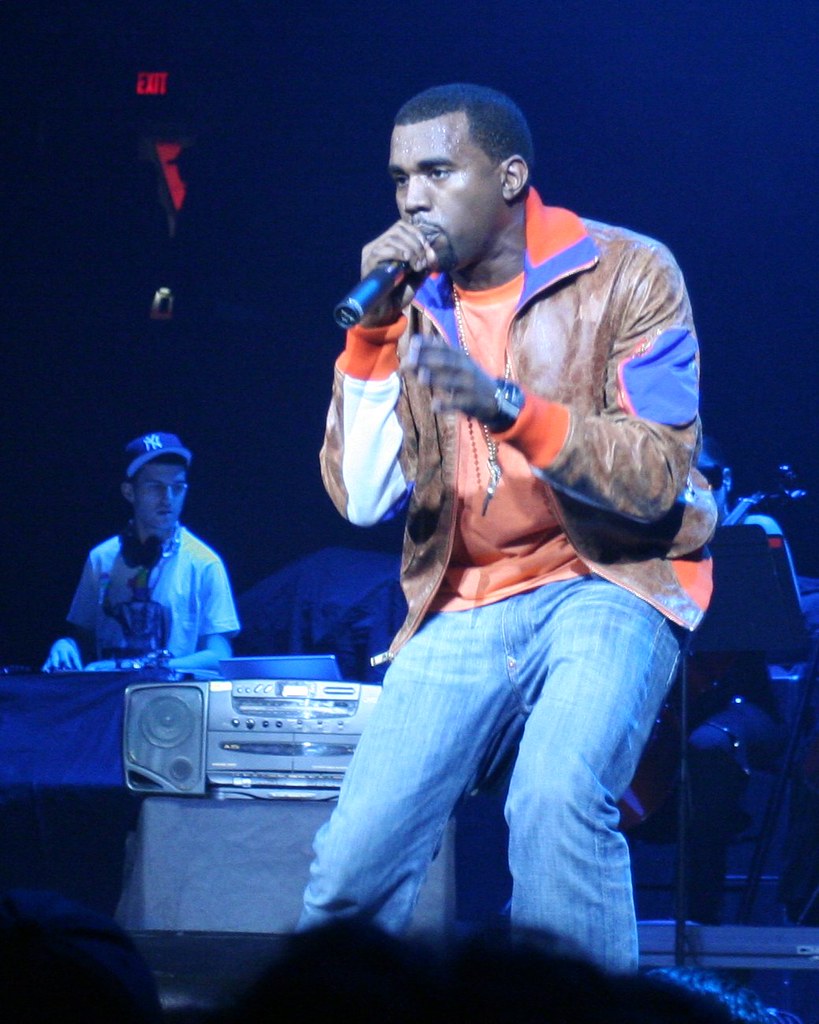
Ye, formerly Kanye West
FILE — Ye, formerly known as Kanye West, is shown in a file photograph. The hip-hop artist and entrepreneur could face up to $23 million in potential damages in an ongoing racial discrimination lawsuit filed by a former security employee of Donda Academy and Yeezy LLC, according to newly reported court documents. (Photo: Phil Romans / Flickr via CC BY-SA 2.0)

A former Donda Academy employee is seeking up to roughly $23 million in damages in his discrimination lawsuit against Kanye West as the two-year-old case moves toward trial, according to newly filed court papers.

Benjamin Provo, a Black former security guard who sued the artist, Yeezy LLC and Donda Academy in 2024, has outlined damages he contends could reach approximately $23 million if he prevails, according to court documents obtained by TMZ.

The figure is not a judgment or settlement, and no court has determined that West, who legally changed his name to Ye in 2021, owes Provo that amount.

Provo's lawsuit alleges he faced racial and religious discrimination while working at Donda Academy and Yeezy and was ultimately fired after refusing a demand to cut his dreadlocks, which he has said he wore in part as an expression of his Muslim faith.

Ye and the other defendants have denied wrongdoing.

Provo filed the lawsuit in Los Angeles County Superior Court in April 2024, accusing Ye and members of his management team of treating Black employees less favorably than white workers.

The complaint alleges Ye frequently screamed at and berated Black employees while treating white employees differently. Provo also alleges that Ye began demanding that employees shave their heads.

According to the complaint, Provo was eventually told that Ye wanted "the one with the dreads" to shave his head or be fired. Provo alleges he refused and subsequently lost his job.

The lawsuit extends beyond Provo's hair.

Provo alleges that Ye expressed displeasure with prominent Black leaders and ordered people associated with Donda to dispose of books related to the Rev. Martin Luther King Jr., Malcolm X and other Black figures.

The newly reported court papers also offer a glimpse at testimony gathered as the case moved toward trial.

Provo's latest filing cites deposition testimony from former Yeezy chief of staff Milo Yiannopoulos concerning racially charged remarks and the provocative way Ye discussed religion in the workplace.

That testimony comes as the two sides fight over what evidence may be considered at trial.

Ye's attorneys have asked the court to exclude social media posts attributed to Ye and Yiannopoulos, arguing that much of the material is irrelevant to whether Provo experienced unlawful discrimination during his employment.

The defense filing includes a 919-page report containing social media material that Provo may seek to use at trial. Ye's attorneys contend that some of the posts came from impersonation, parody or other accounts and have argued that Provo should be required to establish the authenticity, relevance and admissibility of disputed material before it is considered.

Another pretrial dispute centers on whether Ye's mental condition during the period covered by the lawsuit has any relevance to the case.

Provo's attorneys have asked the court to prevent Ye's side from arguing that he was of unsound mind, contending that such a defense was not raised in the defendants' answer and that Ye did not produce medical records or designate an expert witness to support such an argument during discovery.

Ye's attorneys have separately asked the court to exclude evidence concerning any alleged mental unfitness, noting that Ye testified during a deposition that he considered himself mentally fit.

Ye has also disputed Provo's characterization of their employment relationship, arguing in court papers that Provo worked for a third-party company that provided workers rather than directly for Ye or his companies.

The $23 million figure represents Provo's calculation of potential damages, not money that has been awarded by the court.

A nonjury trial is currently scheduled for Oct. 12 in Los Angeles County Superior Court. Ye's attorneys have asked Judge Brock T. Hammond to postpone it until May 17, 2027, or another date available to the court and Provo.

Monday, September 14, 2026

Tone Capone, Producer Who Connected Bay Area and Houston Rap, Dies at 59

FILE — Producer Tone Capone, born Anthony Douglas Gilmour, is shown DJing in the 1980s. Capone, the Bay Area beatmaker behind Luniz's 1995 hit "I Got 5 On It" and a frequent Rap-A-Lot Records collaborator, died Saturday, Sept. 12, 2026. He was 59. (Photo: Tone Capone / Instagram)

The Bay Area beatmaker behind Luniz’s 1995 crossover hit also produced seven tracks on Scarface’s platinum album and Devin the Dude’s “Sticky Green.”

Tone Capone, the Bay Area producer behind Luniz’s “I Got 5 On It” whose catalog later reached deep into Houston through Scarface, Devin the Dude and Rap-A-Lot Records, died Saturday.

He was 59.

Capone, born Anthony Douglas Gilmour, was born in Berkeley and raised in North Oakland near Bushrod Park. Close family members reported his death online Sunday.
A cause of death had not been announced as of Monday. Capone had lived in the Las Vegas area since 2021.

For many listeners, his signature will always be “I Got 5 On It.”

The 1995 Luniz single reached No. 8 on the Billboard Hot 100, while the duo’s debut album, “Operation Stackola,” reached No. 1 on Billboard’s Top R&B/Hip-Hop Albums chart.

The record's construction was more complicated than a simple sample flip.

The official music video for Luniz's 1995 crossover hit "I Got 5 On It." The track, produced by Tone Capone, reached No. 8 on the Billboard Hot 100 and became one of the most recognizable anthems in West Coast hip-hop history. (Video via YouTube)

Luniz brought Capone Club Nouveau’s “Why You Treat Me So Bad” as a musical starting point. Capone told The Guardian in 2019 that the original groove did not hit hard enough for the sound he wanted.

“I wanted everything in your face,” he said.

Capone slowed the groove and added bells, voices and scratches. In a separate interview with TheWrap, he explained that he replayed the central musical idea rather than directly sampling the Club Nouveau recording. He identified Audio Two’s “Top Billin’” and Kool & the Gang’s “Jungle Boogie” as the record’s direct sampled elements.

Capone also pushed for a singer on a hook that Luniz originally rapped. Michael Marshall, his old Berkeley High School friend and a member of Timex Social Club, supplied the melody that became one of the song's defining features.

The record found another life nearly a quarter-century later.

In 2019, a slowed, orchestral “Tethered Mix” of “I Got 5 On It” became a recurring musical device in Jordan Peele’s horror film “Us,” turning a familiar party record into something deliberately unsettling.

Capone's work had begun long before his biggest hit. He learned to DJ while attending Berkeley High and was playing parties and other events while still young. By the mid-1980s, he was building beats with four-track cassette recorders, drum machines, turntables and tape decks.

His résumé eventually expanded well beyond Northern California.

By the mid-1990s, Capone had entered the Rap-A-Lot orbit that connected Bay Area artists with Houston. Mike Dean later told HipHopDX that he brought Capone in to help produce Scarface’s 1997 album “The Untouchable.”

The surviving album credits show how substantial that role became.

Scarface's "Smile," featuring 2Pac and Johnny P, from the 1997 platinum album "The Untouchable." Tone Capone served as a co-producer on the track alongside Mike Dean and Scarface, marking one of his most prominent collaborations with Houston's Rap-A-Lot Records. (Video via YouTube)

Capone shares production credit on seven tracks: “Untouchable,” “Southside,” “Money Makes the World Go Round,” “Mary Jane,” “Smile,” “Smartz” and “Faith.” His collaborators across those tracks included Scarface, Dean, N.O. Joe and Domo.

“The Untouchable” debuted at No. 1 on the Billboard 200 and went platinum.

Among Capone’s contributions was “Smile,” the Scarface record featuring 2Pac and Johnny P. Official Rap-A-Lot metadata credits the production to Scarface, Dean and Capone.

The Houston connection continued beyond Scarface.

Capone produced “Sticky Green,” featuring Scarface, from Devin the Dude’s 1998 debut album, “The Dude.” Devin later recalled that Scarface, Capone and a musician named Harm brought the music to him as the song was taking shape.

Back home, Capone’s credits stretched across generations of Bay Area rap. He worked with artists including E-40, Celly Cel, 3XKrazy, The Click, Dru Down, Mac Dre, Mac Mall and the Jacka.

He remained involved in music in later years even after taking a hospital job and eventually retiring from that work.

“I Got 5 On It” will inevitably be the first record attached to Tone Capone’s name.

The credits that come after it — Scarface, 2Pac, Devin the Dude, E-40, Celly Cel, 3XKrazy and Mac Dre among them — explain why his legacy was considerably larger than one hit.

Friday, September 11, 2026

Federal Jury Acquits Lil Durk on All Counts in Quando Rondo Murder-for-Hire Case

Lil Durk, whose legal name is Durk Banks, is shown in an Oct. 24, 2024, booking photo. A federal jury in Los Angeles acquitted the Grammy-winning rapper Friday on all five counts in his murder-for-hire trial. (Broward Sheriff's Office)
Lil Durk was acquitted Friday on all five counts in the federal murder-for-hire trial that threatened to send the Grammy-winning Chicago rapper to prison for life.

A jury in Los Angeles rejected prosecutors' case that Durk, whose legal name is Durk Banks, helped organize and finance a 2022 plot to kill rapper Quando Rondo in retaliation for the death of King Von.

Rondo survived the attack.

His cousin, Saviay'a Robinson, 24, was killed.

The five not-guilty verdicts cleared Durk of every charge the jury was asked to decide in this trial, including stalking and murder-for-hire allegations stemming from the Aug. 19, 2022, shooting near the Beverly Center.

Durk wiped away tears as the verdicts were read, according to courtroom reporting from the Los Angeles Times.

The decision came after two weeks of testimony and three days of deliberations in a case built largely around whether prosecutors could connect Durk to an attack carried out by other men.

The shooting itself was not the central dispute.

Prosecutors said gunmen tracked Rondo, whose legal name is Tyquian Bowman, through Los Angeles before opening fire near a gas station. Robinson was killed while Rondo, the government's alleged intended target, escaped the gunfire.

The question for jurors was whether prosecutors had proved Durk's criminal responsibility for what happened.

The government argued that the attack grew out of the November 2020 killing of Dayvon Bennett, better known as King Von, after a fight involving Rondo outside an Atlanta nightclub.

Prosecutors alleged Durk sought revenge, put money behind the effort to kill Rondo and used people and resources connected to his Only the Family organization to help make it happen.

Durk was never accused of being one of the gunmen in Los Angeles.

Instead, prosecutors relied on conspiracy and other theories of liability that did not require him to personally pull a trigger. They presented travel records, financial evidence and testimony from three cooperating witnesses who had been inside Durk's circle or involved in the attack.

Assistant U.S. Attorney Ian Yanniello told jurors during closing arguments that Durk had his "shooters on speed dial," arguing that the attack would not have happened without his money and influence.

The defense told a very different story.

Durk's lawyers argued that former personal assistant Kavon Grant organized the attack himself and had access to Durk's money and other resources without needing authorization for everything he did.

They also attacked the credibility of Grant and two other cooperating witnesses, arguing that each had powerful reasons to help prosecutors after becoming implicated in the case themselves.

Attorneys Brian Steel and Drew Findling repeatedly argued that the government had witnesses who could describe the plot but lacked reliable proof tying Durk himself to an agreement to carry it out.

Jurors appeared to focus closely on that distinction during deliberations.

On Thursday, the panel asked U.S. District Judge Michael W. Fitzgerald questions involving intent and conspiracy. Jurors had previously requested easier digital access to the evidence admitted during the trial.

By Friday, they had reached their answer.

Not guilty on all five counts against Durk.

The result was different for the two men tried alongside him.

Deondre Wilson and David Lindsey were convicted of conspiracy to commit stalking, stalking with a dangerous weapon and stalking resulting in death. They were acquitted on the murder-for-hire charges.

For Durk, however, Friday's verdict does not resolve every federal allegation hanging over him.

Fitzgerald ruled in July that newly added racketeering-related charges would be separated from the murder-for-hire trial and considered in a later proceeding.

Those allegations broadened the government's case beyond the 2022 Los Angeles shooting and included accusations of other violence connected to what prosecutors characterize as a criminal enterprise associated with Durk and OTF.

Durk has denied the allegations. He remained in federal custody Friday pending the separate case. That means the acquittal represents a complete victory for Durk on the five charges decided by Friday's jury, but not the end of his federal legal problems.

Wednesday, September 2, 2026

Lizzo’s Touring Company Wins Dismissal of Former Wardrobe Worker’s Remaining Claims

Lizzo appears in an Instagram video posted Tuesday after a federal judge dismissed the remaining claims against her touring company in a lawsuit brought by former wardrobe worker Asha Daniels. Lizzo, who had been dismissed as an individual defendant in 2024, said she was “relieved” by the ruling. (Lizzo/Instagram)
Lizzo has scored another major legal victory, but one of the most important distinctions in the singer's long-running court battles remains easy to miss.

A federal judge has thrown out the remaining claims brought by former tour wardrobe worker Asha Daniels against Lizzo's touring company and other defendants, ending the case at the trial-court level nearly three years after Daniels sued.

U.S. District Judge Fernando L. Aenlle-Rocha granted summary judgment Tuesday to Big Grrrl Big Touring Inc. and the remaining defendants.


Lizzo, whose legal name is Melissa Jefferson, had already been dismissed as an individual defendant in the case in December 2024.

Daniels worked in wardrobe during the European leg of Lizzo's “Special” tour in 2023. She later sued alleging sexual and racial harassment, disability discrimination and other mistreatment.

The judge concluded that the evidence Daniels presented did not establish several of her claims under the legal standards required to send them to trial.

Among other findings, the court concluded that Daniels had not shown conduct demonstrating generalized hostility toward women or that men and women were treated differently in a way that supported her Title VII claims.

The court also rejected her racial-discrimination and disability claims.

Lizzo celebrated the ruling Tuesday on social media.

She said she was relieved by the outcome and maintained that the allegations against her and her company were unfounded.

Daniels' attorney disputed that interpretation of the case, arguing that the court improperly evaluated evidence that should have been considered by a jury and indicating that Daniels is considering her next steps.

The ruling is significant, but it does not end all of the litigation surrounding Lizzo's workplace.

Daniels' case is separate from the lawsuit filed in 2023 by former dancers Arianna Davis, Crystal Williams and Noelle Rodriguez.

That lawsuit generated widespread attention with allegations involving sexual harassment and a hostile work environment. Lizzo has denied the allegations.

Some claims in the dancers' case have been dismissed, but the litigation has not been completely resolved.

That distinction is particularly important because the two cases were filed within weeks of each other and have frequently been conflated in coverage of the allegations surrounding Lizzo.

Tuesday's decision concerns Daniels and her work with the wardrobe department.

For that case, at least at the federal trial-court level, there will be no jury trial on the remaining claims.

Nearly three years after Daniels sued, the remaining defendants have won summary judgment.

Monday, August 31, 2026

Jury Convicts Duane ‘Keffe D’ Davis of Murder Nearly 30 Years After Tupac Shakur’s Death

Duane “Keffe D” Davis, shown in a 2023 booking photo, was found guilty Monday, Aug. 31, 2026, of first-degree murder in the 1996 killing of Tupac Shakur. The Las Vegas jury deliberated for less than three hours before convicting Davis, the only person ever charged in the nearly 30-year-old case. (Las Vegas Metropolitan Police Department)

Nearly 30 years after Tupac Shakur was gunned down on a Las Vegas street, the only person ever charged in his killing has been convicted of murder.

A Las Vegas jury found Duane “Keffe D” Davis guilty of first-degree murder with a deadly weapon Monday, delivering the first criminal conviction in a case that spent decades as one of hip-hop’s most infamous unsolved killings.

Jurors deliberated for less than three hours.

Davis, 63, was not accused of firing the shots that killed Shakur. Prosecutors instead argued that the former South Side Compton Crips leader helped organize the retaliatory attack and provided the gun used in the shooting.

Under Nevada law, prosecutors did not have to prove Davis pulled the trigger to hold him criminally responsible for Shakur’s death.

The verdict caps a case with an unusual history: For years, authorities could not bring charges in Shakur’s killing. Then Davis began publicly telling the story himself.

His accounts in interviews, a documentary, conversations with investigators and his 2019 memoir, “Compton Street Legend,” eventually became central to the prosecution’s case against him.

Shakur was shot Sept. 7, 1996, after attending a Mike Tyson fight at the MGM Grand in Las Vegas.

Earlier that night, Shakur, Death Row Records co-founder Marion “Suge” Knight and others encountered Davis’ nephew, Orlando “Baby Lane” Anderson, inside the hotel. Surveillance video captured Shakur and members of his entourage attacking Anderson.

Prosecutors argued that the beating set a revenge plot in motion.

Davis and three other men got into a white Cadillac and went looking for Shakur and Knight, prosecutors said. They eventually found the pair in a BMW stopped near the Las Vegas Strip.

Someone inside the Cadillac opened fire.

Shakur was struck multiple times. Knight was wounded but survived.

Shakur died six days later at a Las Vegas hospital. He was 25.

Davis has acknowledged being in the Cadillac but maintained that he was not the shooter. In previous accounts, he described passing a gun toward the vehicle’s back seat.

Prosecutors used those accounts to argue that Davis was not merely a witness to the killing but an active participant in it.

During closing arguments Monday, Chief Deputy District Attorney Binu Palal told jurors that determining who actually pulled the trigger was not necessary to determine Davis’ guilt.

The defense offered a striking counterargument: Davis could not be trusted.

Defense attorney Michael Sanft argued that Davis embellished or fabricated portions of his accounts and that prosecutors lacked physical evidence independently tying him to the murder. The defense also pointed to inconsistencies in Davis’ various versions of what happened that night.

That argument required jurors to consider whether the man who spent years publicly describing his presence in the car and his involvement in the events surrounding Shakur’s death had been telling the truth then — or was telling the truth now when he denied criminal responsibility.

The jury sided with prosecutors.

The conviction provides a courtroom resolution to a killing that became inseparable from the mythology surrounding one of rap’s most influential artists.

Shakur was already a major star when he was killed, but 1996 had pushed his career to another level. His fourth studio album, “All Eyez on Me,” had arrived in February as a sprawling double album featuring “California Love,” “How Do U Want It” and “I Ain’t Mad at Cha.”

His death also came during a turbulent period in hip-hop, amid the heavily publicized rivalry involving artists and labels associated with the East and West coasts.

For years afterward, theories about Shakur’s killing flourished while the case remained officially unresolved.

Davis increasingly inserted himself into that history.

A once-secret 2008 interview with investigators became particularly important at trial. Davis spoke to authorities while they were investigating the killing of Christopher Wallace, the rapper known as the Notorious B.I.G., who was fatally shot in Los Angeles six months after Shakur’s death.

Davis later discussed the Shakur shooting publicly, including in the 2018 documentary series “Death Row Chronicles” and in “Compton Street Legend,” published the following year.

Those public disclosures ultimately helped investigators take another look at the long-dormant case.

Las Vegas police arrested Davis in September 2023 after a grand jury indicted him on a murder charge.

By then, the three other men authorities identified as occupants of the Cadillac were dead, leaving Davis as the only person from the vehicle who could face prosecution.

Three decades after the gunfire that killed Shakur, a jury has now held him criminally responsible.

Davis faces the possibility of life in prison.

Wacko, Rapper Whose ‘Nolia Clap’ Became a New Orleans Anthem, Dies

The cover of UTP's 2004 “Nolia Clap” release. The title track, co-written by Damon “Wacko” Grison, Juvenile, Skip and producer Donald “XL” Robertson, reached No. 31 on the Billboard Hot 100. (Rap-A-Lot Records)
Damon “Wacko” Grison, the New Orleans rapper whose work with Juvenile and Skip helped turn “Nolia Clap” into a national hit and an enduring piece of the city's hip-hop history, has died.

News of Grison's death was announced by New Orleans Room on Instagram, followed by a remembrance from Mia X and condolences from Young Buck, DJ Paul and Big Freedia. His age and cause of death have not been publicly confirmed.

For listeners who encountered UTP during its national breakthrough in the mid-2000s, Wacko was one of the three rappers behind “Nolia Clap.”

His connection to the record ran considerably deeper than that.

Juvenile said so himself.

“That's really more like Wacko's song,” Juvenile told Complex in 2013 while breaking down the most important records of his career.

According to Juvenile, Wacko had been singing the “Nolia Clap” hook around the studio before the group traveled to the West Coast and connected with producer Donald “XL” Robertson. They began building the track around Wacko's idea, with Juvenile saying Mannie Fresh and producer Slice T later added touches to the record.


The songwriting credits support Wacko's creative role.

Grison shares credit on “Nolia Clap” with Terius Gray, better known as Juvenile; Clifford Nicholas, better known as Skip; and Robertson.

The record became UTP's biggest national hit, reaching No. 31 on the Billboard Hot 100 and No. 9 on Billboard's Hot R&B/Hip-Hop Singles & Tracks chart.

That success arrived after UTP had undergone considerable change.

Juvenile formed the Uptown Project Playas as he was separating from Cash Money Records. The early collective had fluid membership and included appearances from Wacko, Skip, Soulja Slim, Corey Cee and Young Buck. After Young Buck left for G-Unit and Soulja Slim was killed in 2003, UTP narrowed into the Juvenile-Wacko-Skip trio most listeners came to know.

Their album “The Beginning of the End...” arrived in May 2004 through Rap-A-Lot Records, with “Nolia Clap” opening the record.


The “Nolia” referred to the Magnolia Projects, officially the C.J. Peete Public Housing Development, in New Orleans' Central City neighborhood. The complex became an important incubator of the city's music across generations and was home to artists including Juvenile and Soulja Slim.

A Closer Walk, the New Orleans music-history project presented by WWOZ, includes “Nolia Clap” among the recordings tied to the Magnolia and traces the development's role in the rise of New Orleans hip-hop.

Wacko and Skip remained part of Juvenile's musical orbit after UTP's breakthrough. Both appeared on Juvenile's 2006 album “Reality Check,” including Wacko's appearances on “Sets Go Up” and “Way I Be Leanin'.”

By 2007, Juvenile was out of UTP and Wacko and Skip continued the group without him, releasing “Back Like We Left Something” through Rap-A-Lot.

Mia X said in her remembrance that Wacko had continued creating music before his death, praising his wordplay and distinctive cadence and saying he had been working on material she considered special.

Wacko's national profile may have been tied most closely to one record. But the history of that record gives him a larger role than the shorthand of “UTP member” suggests.

Years before there was any reason to argue about Wacko's legacy, Juvenile had already made the most important point about the song.

It was, he said, “more like Wacko's song.”

Tuesday, August 25, 2026

Lil Durk Murder-for-Hire Trial Opens as Defense Blames Cooperating Witness for Quando Rondo Plot

Rapper Lil Durk, whose legal name is Durk Devontay Banks, is shown in an October 2024 booking photo following his arrest in Broward County, Fla. Banks has pleaded not guilty to federal charges stemming from an alleged murder-for-hire plot targeting rapper Quando Rondo in Los Angeles in 2022. (Broward Sheriff’s Office)

Lil Durk’s federal murder-for-hire trial opened with two sharply different explanations for a 2022 Los Angeles ambush that left one man dead.

Prosecutors told jurors Monday that the Grammy-winning Chicago rapper financed a revenge plot against Quando Rondo after the killing of King Von.

Durk’s defense says the government has the wrong mastermind.

Attorneys for the rapper, whose legal name is Durk Devontay Banks, instead pointed to former personal assistant Kavon Grant, one of three alleged co-conspirators who have pleaded guilty and agreed to cooperate with prosecutors.

“This is a case about revenge, stalking and premeditated murder,” Assistant U.S. Attorney Daniel H. Weiner told jurors, according to the *Los Angeles Times*.

Banks, 33, has pleaded not guilty.

The federal case centers on the Aug. 19, 2022, shooting outside a gas station near the Beverly Center in Los Angeles.

Prosecutors allege Banks wanted Tyquian Bowman, the Georgia rapper known professionally as Quando Rondo, killed in retaliation for the November 2020 death of Dayvon “King Von” Bennett.

Von was fatally shot following a confrontation outside an Atlanta nightclub involving members of Bowman’s entourage.

Nearly two years later, prosecutors say a group associated with Banks traveled from Chicago to Southern California, tracked Bowman and eventually attacked his vehicle.

Bowman survived.

His cousin, 24-year-old Saviay’a Robinson, was shot and killed.

In his opening statement Monday, Weiner portrayed Banks as the person who supplied both the motive and the resources behind the alleged plot.

“It was defendant Banks’ beef, it was defendant Banks’ money, it was defendant Banks’ hit men,” Weiner told the jury, according to the *Times*.

Banks was not at the scene of the shooting, a point his defense highlighted as it challenged the government’s attempt to connect him to the attack.

Attorney Marissa Goldberg told jurors that Grant — not Banks — arranged the operation.

According to the defense, Grant booked hotels, obtained vehicles and purchased ski masks before the shooting. Goldberg argued that Grant later implicated Banks after becoming a cooperating witness, giving prosecutors the celebrity defendant she described as a “big fish.”

“Mr. Banks had nothing to do with it,” Goldberg told jurors.

That dispute could become one of the trial’s defining questions.

Grant has pleaded guilty and is expected to testify for the government. So have Keith Jones and Kacey “OTF Jam” Hester, according to prosecutors.

Banks is being tried alongside Deondre Dontrell Wilson and David Brian Lindsey. Both men also deny the charges against them.

Federal prosecutors contend the group followed Bowman around Los Angeles before gunmen opened fire at the gas station. Robinson was struck several times and died from his injuries.

The defense is attacking not only the government’s cooperating witnesses but also one of the more culturally sensitive elements of the prosecution: Banks’ music.

Goldberg told jurors prosecutors are expected to introduce songs and lyrics while trying to establish Banks’ state of mind and connection to the alleged revenge plot.

She characterized the material as artistic expression rather than evidence of a murder agreement.

“This is art, this is performance,” Goldberg said.

Banks’ lawyers also say prosecutors cannot show that he actually paid or promised to pay anyone for Robinson’s killing.

“There is no money to follow,” Goldberg told the jury.

The distinction matters because prosecutors are asking jurors to find that Banks was not merely angry about Von’s death or acquainted with people who committed the shooting, but that he knowingly participated in an agreement to have Bowman killed.

The government says financial and logistical evidence, communications and testimony from cooperating defendants will establish that connection.

The defense says those same cooperating witnesses have powerful reasons to shift responsibility toward Banks as they await sentencing.

Banks’ music career adds an unusual backdrop to the proceedings.

He won his first Grammy in 2024 for “All My Life,” his collaboration with J. Cole, taking home the award for best melodic rap performance. He is also the founder of Only the Family, commonly known as OTF.

The trial does not include every allegation federal prosecutors have made against Banks.

A federal grand jury added separate racketeering-related allegations this summer involving other alleged violence in Chicago and Atlanta. Judge Michael W. Fitzgerald ordered those counts tried separately, keeping the current proceeding focused on the Los Angeles case.

Those allegations remain unresolved and are not evidence of Banks’ guilt in the trial now before jurors.

Banks has remained in federal custody since his October 2024 arrest in South Florida.

Monday’s opening statements were only the beginning of what is expected to be a closely watched trial built around competing interpretations of the same relationships, communications and witnesses.

Prosecutors say Banks used his money and influence to turn grief over King Von’s death into a murder plot.

His lawyers say the people who actually organized the attack are now trying to save themselves by putting Lil Durk at the center of it.

Thursday, August 20, 2026

Freedom Williams Faces Federal Lawsuit Over C+C Music Factory Name

A collage of C+C Music Factory album covers traces the group’s recording history from “Gonna Make You Sweat” in 1990 through “Anything Goes!” in 1994 and the self-titled “C+C Music Factory” in 1995. Co-founder Robert Clivillés is suing Freedom Williams over rights to the group’s name and federal trademark.

The dispute asks a surprisingly complicated question about one of the biggest dance acts of the early ’90s: Who has the right to call something C+C Music Factory?

The argument over who gets to use the C+C Music Factory name has moved from interviews, trademark proceedings and social media into federal court.

Robert Clivillés, who created the hitmaking dance act with the late producer David Cole, filed a nine-count lawsuit against rapper Freedom Williams and two companies associated with him, accusing them of improperly exploiting the C+C Music Factory name.

Clivillés filed the complaint Aug. 14 in U.S. District Court for the Eastern District of New York (Case No. 1:26-cv-04981). He is representing himself.

The defendants are Williams, Freedom Williams Entertainment LLC and Big Mac Entertainment LLC, along with 20 unidentified defendants.

Clivillés alleges trademark infringement, false designation of origin, fraud on the U.S. Patent and Trademark Office, unfair competition, unjust enrichment, fraud, defamation and breach of contract. He is also asking the court to cancel the federal trademark registration held by Freedom Williams Entertainment.

The filing seeks at least $10 million in compensatory damages. Clivillés asks the court to treble that amount under the federal Lanham Act, which would bring that portion of his requested award to at least $30 million. He is additionally seeking punitive damages, defendants’ profits, costs and injunctive relief.

No court has awarded him any of that money.

At the center of the case is a name familiar to anyone who was near a radio, dance floor or MTV in 1991.

Clivillés argues that the two C’s refer specifically to himself and Cole.

“The name C+C Music Factory stands for Clivillés and Cole Music Factory,” the complaint says.

He contends that Williams was a featured rapper and vocalist on C+C recordings rather than a founder or owner of the act and therefore never acquired the right to turn the group name into his own performing brand.

Williams’ side disputes that conclusion.

Attorney Charles F. Schmitt, who has represented Freedom Williams Entertainment in trademark matters, told Billboard that the new claims are meritless and that Williams is the lawful owner of the registered mark. Schmitt also argues that an earlier trademark challenge brought by Clivillés was dismissed with prejudice and that Clivillés should not get another attempt to undo the registration.

That earlier case makes the current dispute considerably more complicated than a simple fight between a founder and a former performer.

Freedom Williams Entertainment owns federal Registration No. 4775972 for the mark C & C MUSIC FACTORY, covering entertainment services.

USPTO records show the company applied for the mark in October 2014. The registration was issued July 21, 2015 and has since been maintained.

Clivillés challenged it before the Trademark Trial and Appeal Board in December 2016. That proceeding never produced a decision deciding who originally owned the name.

Instead, the board issued an order in May 2018 after Clivillés failed to file his trial brief. When no response was filed to that order, the board entered judgment against him and dismissed the cancellation proceeding with prejudice on June 25, 2018.

Clivillés emphasizes in his new complaint that the board did not decide the underlying ownership allegations on their merits.

Williams’ attorney emphasizes the other half of the equation: The proceeding was nevertheless dismissed with prejudice.

Whether that earlier judgment prevents Clivillés from pursuing some or all of his present claims is now one of the legal issues hanging over the federal case.

The fight has roots stretching much further back.

Clivillés and Cole emerged from New York’s dance-club scene and became an in-demand production and remixing team before launching C+C Music Factory around 1990.

Their debut album, “Gonna Make You Sweat,” became one of the defining crossover dance records of the period.

Its title track, “Gonna Make You Sweat (Everybody Dance Now),” featured Williams’ rap and Martha Wash’s powerhouse vocal. It topped the Billboard Hot 100 for two weeks in February 1991, while the album later climbed to No. 2.

“Here We Go (Let’s Rock & Roll)” and “Things That Make You Go Hmmm...” extended the run, with Williams prominently featured on both.

The structure of C+C Music Factory was never as straightforward as a traditional band standing together behind microphones.

Clivillés and Cole were its central production team, while different rappers and singers appeared across its records. Contemporary coverage routinely identified Williams as the rapper associated with the group, while Columbia releases billed tracks such as “Gonna Make You Sweat” as C+C Music Factory featuring Freedom Williams.

The act’s history also includes one of the era’s best-known disputes over performer credit.

Wash sang the explosive vocal heard throughout “Gonna Make You Sweat,” but Zelma Davis appeared lip-syncing that part in its original music video. After Wash objected and sued, MTV added an on-screen notice distinguishing Wash’s vocals from Davis’ visual appearance.
Long before the current trademark case, Williams had his own legal dispute with Clivillés and Cole.

In 1992, Williams filed a $10 million lawsuit alleging the producers had cheated him out of royalties and breached obligations connected with his recording and management agreements.

Williams subsequently pursued a solo career.

Cole died in New York in January 1995 at 32. Clivillés continued working as a producer, songwriter and remixer.

The current complaint alleges that Williams later began performing concerts under the C+C Music Factory name and eventually obtained trademark registrations without Clivillés’ authorization.

Williams has publicly offered a different account.

In a 2019 interview, he said he had continued performing and representing the music when Clivillés was no longer touring with him and defended his decision to secure the trademark.

The dispute flared publicly again this year.

After Williams became associated with a planned Freedom 250 concert series in Washington, D.C., Clivillés used social media to distance himself from Williams’ participation and comments and argued publicly that Williams did not speak for the C+C Music Factory legacy.

Clivillés threatened legal action in June.

Ten days after that warning, according to the new complaint, Big Mac Entertainment released “Into the Future,” a new recording marketed on digital services under the C+C Music Factory name alongside Williams and Mark Walker. 
The June 12 release is independently listed by digital music services under C+C Music Factory, Freedom Williams and Walker, with Big Mac Entertainment as the label.

Clivillés cites that release as evidence that what had been a long-running dispute over live appearances had expanded into new recordings.

He is asking the federal court to stop Williams and the other defendants from using the C+C Music Factory name for performances, recordings and other commercial activity.

He also wants Registration No. 4775972 canceled, “Into the Future” and other disputed recordings removed from digital services, and administrative control of the long-running C+C Music Factory Instagram account transferred to him.

Clivillés filed a separate motion seeking a temporary restraining order and preliminary injunction on the same day as the complaint.

None of those requests should be confused with a court ruling.

At this stage, they are Clivillés’ allegations and requested remedies, and Williams disputes his underlying claim to the name.

Thirty-five years after C+C Music Factory made “Gonna Make You Sweat” unavoidable, the new lawsuit is not really asking a court to decide who audiences remember from the record.

Williams’ voice is part of that history. So are Wash’s vocals, Davis’ image and the work of numerous singers and musicians who passed through what was deliberately constructed as a “music factory.”

The legal question is narrower — and potentially much harder.

Who owns the name on the factory door?

Wednesday, August 12, 2026

Nine Years After Nipsey Hussle and Bino Rideaux Recorded it, ‘Prolific’ is Ready

The cover of “Prolific,” the collaborative album from Nipsey Hussle and Bino Rideaux, due Aug. 14, 2026. Hussle selected the photograph used for the artwork while the pair were working on the project in 2017. (All Money In/Out The Blue/Atlantic Records)
Posthumous albums often come with an unavoidable question: How much of what listeners are hearing did the artist actually choose?

“Prolific,” the new Nipsey Hussle and Bino Rideaux album arriving Friday, comes with an unusually clear answer.

Hussle and Rideaux recorded the music together during an intensive three-month stretch in 2017, nearly two years before Hussle’s death. They also sequenced the project during his lifetime, and Hussle personally selected the photograph that became its cover, according to a Los Angeles Times interview published Wednesday with Rideaux and Hussle’s older brother, Samiel “Blacc Sam” Asghedom.

The 15-track “Prolific” is scheduled for release Aug. 14 by All Money In & Out The Blue Records under exclusive license to Atlantic Recording Corp. The date falls one day before what would have been Hussle’s 41st birthday.

For Hussle’s family, the long delay was intentional.

Asghedom, his brother’s longtime business partner and estate administrator, told the Times that people began pressing the family to release unreleased Nipsey music after the rapper’s death in 2019.


He resisted.

“When we drop the music, we gotta feel like it’s the right time,” Asghedom told the newspaper.

The distinction matters because “Prolific” is not being presented as an album constructed years later from unrelated Nipsey verses.

Its foundation was already there.

Hussle and Rideaux began working together in 2016 after Hussle heard Rideaux’s music and invited the younger South Los Angeles artist to his studio. Two songs from that early session appeared on Hussle’s “Slauson Boy 2,” and the partnership grew into their 2017 collaborative mixtape “No Pressure.”

That same year, Hussle rented NoName Studios in Tarzana where he and Rideaux effectively moved in for about 90 days.

They slept there. They showered there. Producers and engineers rotated through. Music was made constantly.

During those sessions, the pair worked on “No Pressure” and the body of music that would eventually become “Prolific.” Rideaux described the atmosphere to the Times as part frat house, part summer camp, with the studio operating around the clock.

That history also requires one important qualification.

Although the recordings and sequencing date to Hussle’s lifetime, Asghedom has previously estimated that the project was about 80% finished when his brother died. The team later did finishing work using unreleased verses and other music Hussle had already recorded with Rideaux.

That is different from saying nothing was touched after 2019.

It is also different from constructing a new album around orphaned vocals.

Asghedom has repeatedly drawn that distinction, describing “Prolific” as a project Hussle deliberately created with Rideaux rather than a collection assembled by the estate after his death.

Even the artwork predates the tragedy.

Hussle chose a blue-tinted photograph showing him and Rideaux with friends at the Hollywood Roosevelt, a hotel they frequented while making the project. The album carried another name during the original sessions; the team later settled on “Prolific,” taking the title from the word Hussle famously had tattooed on his right temple.

The completed track list also reaches well beyond the two Los Angeles rappers.

Guests include Cardi B, Ty Dolla $ign, Leon Thomas, James Fauntleroy, Buddy and BH. The 15-song album includes the previously released “Reckless” featuring Static Major, “Sacrifices” featuring Fauntleroy, “All Summer” featuring BH and “I Just Wanna Know” with Cardi B and Ty Dolla $ign.

Several producers involved with “Prolific” also worked on Hussle’s 2018 major-label debut, “Victory Lap,” including Mike & Keys and Larrance “Rance 1500” Dopson.

Musically, Rideaux told the Times that “Prolific” is more vulnerable and experimental than “No Pressure.” Relationships play a larger role in the subject matter, and the production sometimes moves beyond the West Coast palette most closely associated with Hussle. One song, “Miami Off the Plane,” uses a Caribbean riddim-inspired beat, a sound Rideaux said neither artist had previously explored.

The experimentation adds another dimension to music Hussle was making as he prepared for the breakthrough that would come with “Victory Lap.”

Hussle, born Ermias Asghedom, was fatally shot outside his Marathon Clothing store in South Los Angeles on March 31, 2019. He was 33.

By then, “Victory Lap” had transformed years of independent momentum into mainstream recognition. The album earned a Grammy nomination for best rap album, and Hussle won two Grammys posthumously in 2020: best rap performance for “Racks in the Middle” and best melodic rap performance for his appearance on DJ Khaled’s “Higher.”

Recordings featuring Hussle have surfaced since his death, including his 2021 collaboration with Jay-Z, “What It Feels Like,” from “Judas and the Black Messiah: The Inspired Album.” But his estate has been notably restrained about turning his unreleased recordings into a full posthumous project.

That restraint is part of what makes “Prolific” notable.

Rather than rushing an album into the market while attention surrounding Hussle’s death was at its peak, his family waited more than seven years — and nearly nine years after the sessions themselves — before deciding this particular body of work was ready to be heard.

Rideaux, now 33 himself, told the Times he understands that releasing music involving an artist as revered as Hussle invites scrutiny. He also made clear that carrying forward what his mentor began has become inseparable from his own career.

The album arrives Friday, Aug. 14.

One day later, Nipsey Hussle would have turned 41.

After years of saying no to pressure for a posthumous album, his family is finally saying yes to one Hussle had already helped shape.

Slider[Style1]

Trending